
CapitalApril 2026
Bypassing Traditional Financing and Unlocking Expansion Resources Using Your Existing Real Estate Portfolio
How U.S. Capital Is Fueling the Rise of Sale/Leasebacks in Mexico.

Mace K. Miller, J.D., M.B.A.
Deep Advisory Group
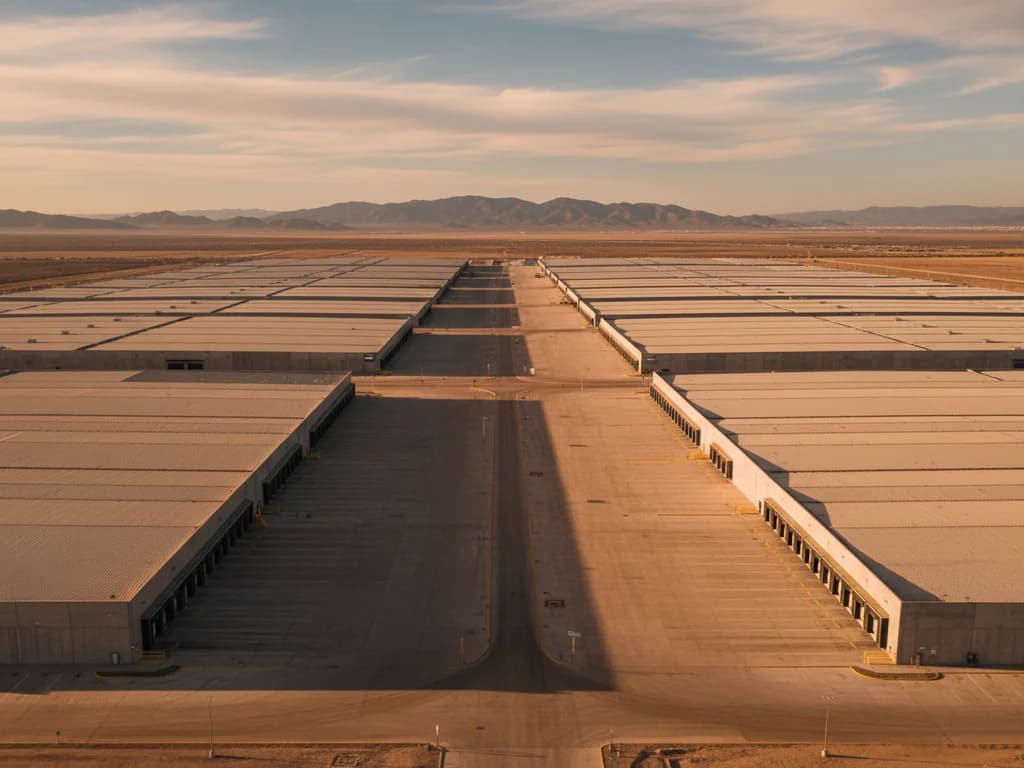
For decades, Mexican operators seeking expansion capital relied on a familiar set of tools: bank financing, private credit, equity partners, or retained earnings. Today, a different strategy is gaining institutional momentum—one that allows companies to raise substantial growth capital without issuing equity or increasing conventional leverage.
The strategy is straightforward: monetize the real estate you already own.
In a sale/leaseback transaction, a company sells its operating facility to an investor and simultaneously enters into a long-term lease to remain in place. The operator continues business uninterrupted, while converting illiquid real estate equity into immediate expansion capital.
Turning Illiquid Assets Into Strategic Capital
Many manufacturing, logistics, and industrial operators in Mexico own the facilities they operate in. Over time, these properties may appreciate significantly, yet the capital remains locked within the balance sheet.
A sale/leaseback unlocks that capital.
The structure typically involves:
- A sale of the facility to an institutional investor
- A long-term lease (often 15–25 years)
- Triple-net lease terms shifting property-level costs to the tenant
- Contractual rent escalations, frequently tied to inflation
From a capital allocation perspective, the transaction replaces owned real estate with liquidity—without disrupting operations.
Why U.S. Capital Is Driving the Expansion
The expansion of sale/leasebacks in Mexico is being fueled primarily by U.S.-based institutional investors, including net-lease REITs, private real estate funds, sovereign wealth partnerships, and global asset managers.
These investors are attracted to:
- Long-duration, predictable cash flows
- Dollar-denominated leases
- Industrial exposure tied to North American supply chains
- Credit-backed rental streams
- Inflation protection through structured escalators
To institutional capital, a Mexican industrial sale/leaseback resembles a long-term corporate bond—secured by real estate and supported by operating performance.
Who Is Selling—and Why
Typical sellers include:
- Industrial manufacturers expanding production capacity
- Logistics operators scaling distribution networks
- Export-driven companies aligned with nearshoring trends
- Family-owned industrial groups optimizing balance sheets
Rather than increasing leverage through secured lending, these companies monetize their real estate and redeploy proceeds into higher-return growth initiatives—automation, geographic expansion, new facilities, or strategic acquisitions.
Why It Can Outperform Traditional Financing
Compared to conventional debt financing, sale/leasebacks may offer:
- Speed of execution
- Large lump-sum proceeds
- No refinancing cliff risk in the traditional sense
- Preservation of revolving credit capacity
- Potential accounting flexibility (subject to applicable standards)
Importantly, the company is not borrowing against the asset—it is transferring ownership entirely and converting embedded equity into operational capital.
Structural Characteristics of Modern Transactions
Cross-border sale/leasebacks in Mexico increasingly feature:
- USD-denominated lease obligations
- Institutional-grade underwriting
- Corporate-level credit analysis
- Mission-critical industrial assets
- Long-duration lease terms
- Clearly defined escalation mechanisms
These are structured capital transactions—not opportunistic property trades.
Outlook for Future Growth
The continued growth of sale/leasebacks in Mexico will likely be supported by:
- Ongoing nearshoring and industrial expansion
- Institutional demand for contracted industrial income
- CFO preference for capital structure flexibility
- Increasing sophistication among Mexican operators
Growth will remain disciplined and tied to infrastructure capacity, regulatory clarity, trade policy stability, and currency considerations. Institutional capital is patient—but selective.
Strategic Conclusion
Sale/leasebacks are evolving from a niche liquidity tool into a core expansion strategy. They allow Mexican operators to bypass traditional financing channels and unlock capital embedded in owned real estate—while U.S. investors gain structured exposure to Mexico's industrial growth story.
In a capital markets environment defined by flexibility and efficiency, sale/leasebacks represent a durable bridge between operating expansion and institutional capital.
This publication is provided for informational purposes only and does not constitute legal, tax, or investment advice. Transactions described herein are subject to market conditions, regulatory requirements, and individual company circumstances.