
ComercioAbril 2026
La Verdadera Economía del Nearshoring

David Arase
Deep Advisory Group
For most of the past three decades, the structure of global manufacturing has been shaped by a high degree of geographic concentration. Beginning in the late 1990s and accelerating after China's entry into the World Trade Organization in 2001, multinational firms increasingly centralized production in China while distributing finished goods to consumer markets across North America and Europe. This model offered powerful cost advantages. China combined large labor pools, deep supplier ecosystems, extensive industrial infrastructure, and export-oriented government policy into a manufacturing platform of unprecedented scale.
By the late 2010s, China had become the dominant manufacturing center of the global economy. According to data compiled by the United Nations Industrial Development Organization, China accounted for approximately 28.7 percent of global manufacturing value added in 2019, far surpassing the United States, Japan, Germany, and other industrial economies. Entire industries—from electronics and appliances to furniture and consumer goods—built supply chains around China's industrial clusters. Manufacturers in Guangdong, Zhejiang, and Jiangsu provinces produced components and finished products at a scale that allowed companies to minimize costs while maintaining reliable supply.
However, the stability of this system began to weaken during the past decade. Trade tensions, geopolitical competition, pandemic disruptions, and shifting corporate risk calculations have forced multinational companies to reconsider the geographic structure of their supply chains. While China remains central to global manufacturing, firms are increasingly diversifying production across multiple regions in order to reduce concentration risk and shorten supply chains serving major consumer markets.
Within this evolving landscape, Mexico has emerged as one of the most strategically significant manufacturing locations in the Western Hemisphere. The relocation of production closer to major consumer markets, often described as nearshoring, is increasingly reshaping supply chains throughout North America. Mexico's geographic proximity to the United States, its integration into the United States–Mexico–Canada Agreement (USMCA), and its established manufacturing base have positioned the country as a key destination for companies seeking alternatives to long-distance supply chains.
Yet the economic forces behind nearshoring are more complex than commonly portrayed in political or media narratives. While Mexico possesses clear structural advantages, the scale of future manufacturing relocation will depend heavily on infrastructure capacity, energy availability, and the continued stability of regional trade integration.
The Shifting Structure of Global Manufacturing
China's rise as the center of global manufacturing was driven by a combination of structural advantages that proved difficult for other countries to replicate. Beginning in the 1990s, the Chinese government invested heavily in industrial zones, transportation infrastructure, and export-oriented policies that attracted multinational corporations seeking lower production costs. Over time, clusters of specialized suppliers developed around major manufacturing regions such as the Pearl River Delta and the Yangtze River Delta.
These clusters created powerful economies of scale. Companies could source components, materials, and specialized services within relatively short geographic distances, reducing costs and increasing efficiency. As manufacturing ecosystems expanded, they also became more technologically sophisticated, supporting complex production in sectors ranging from electronics assembly to advanced machinery.
The global financial crisis of 2008 reinforced China's central role in manufacturing. As companies sought to maintain profitability during a period of economic uncertainty, consolidating production in highly efficient manufacturing clusters became increasingly attractive. The result was an unprecedented concentration of global production capacity within a single country.
However, several developments began to challenge the sustainability of this model. One major turning point occurred during the U.S.–China trade dispute beginning in 2018. The United States imposed tariffs on approximately $370 billion worth of Chinese imports, with many categories facing duties of 25 percent under Section 301 of the Trade Act of 1974. These tariffs significantly altered the cost structure for companies exporting Chinese-manufactured goods to the United States. While some firms absorbed the additional costs, others began exploring alternative production locations to maintain competitiveness.
The COVID-19 pandemic exposed another vulnerability: supply chain concentration risk. Lockdowns across China and other parts of Asia disrupted manufacturing output, while port closures and shipping delays caused global supply shortages. Industries ranging from semiconductors to consumer goods experienced production bottlenecks as supply chains struggled to adapt to rapidly changing conditions.
At the same time, geopolitical tensions between the United States and China have created additional uncertainty for multinational firms. Export controls on advanced technologies, investment restrictions, and regulatory scrutiny have all contributed to a business environment in which long-term reliance on a single manufacturing geography carries greater strategic risk.
These factors have not eliminated China's role in global manufacturing, but they have accelerated a gradual shift toward multi-regional production networks. Companies increasingly maintain manufacturing capacity in several locations rather than relying exclusively on one country.
Mexico's Role in North American Supply Chains
Among the countries benefiting from supply chain diversification, Mexico holds a particularly strong position due to its geographic, economic, and institutional ties to the United States.
The most obvious advantage is geographic proximity. Manufacturing in Mexico allows companies to serve the United States with dramatically shorter transportation times compared with Asia. Ocean shipments from East Asia to North American ports typically require two to four weeks depending on shipping schedules and port congestion. In contrast, goods produced in northern Mexico can reach distribution centers in Texas, Arizona, or California within one or two days by truck or rail.
This logistical advantage has significant implications for supply chain management. Shorter transportation times reduce inventory requirements, improve responsiveness to consumer demand, and lower overall working capital costs. In industries characterized by rapid product cycles such as electronics, apparel, and consumer appliances, the ability to respond quickly to market fluctuations is increasingly valuable.
Mexico also benefits from deep trade integration with the United States. The United States–Mexico–Canada Agreement, which entered into force in 2020, maintains tariff-free trade for most goods produced within North America that meet regional content requirements. For companies facing tariffs on Chinese imports, producing within the USMCA region can significantly improve cost competitiveness.
The scale of this integration is substantial. According to the U.S. Census Bureau, total trade in goods between the United States and Mexico reached approximately $807 billion in 2023, making Mexico the United States' largest trading partner. Manufactured goods account for the majority of this trade. Mexico is the largest exporter of manufactured goods to the United States, including automobiles, auto parts, televisions, and household appliances.
Mexico's manufacturing base has expanded steadily over several decades, supported by industrial clusters in automotive manufacturing, electronics assembly, aerospace components, and consumer goods production. Regions such as Nuevo León, Coahuila, Chihuahua, Baja California, and Querétaro host extensive networks of suppliers, contract manufacturers, and logistics providers that support cross-border production systems.
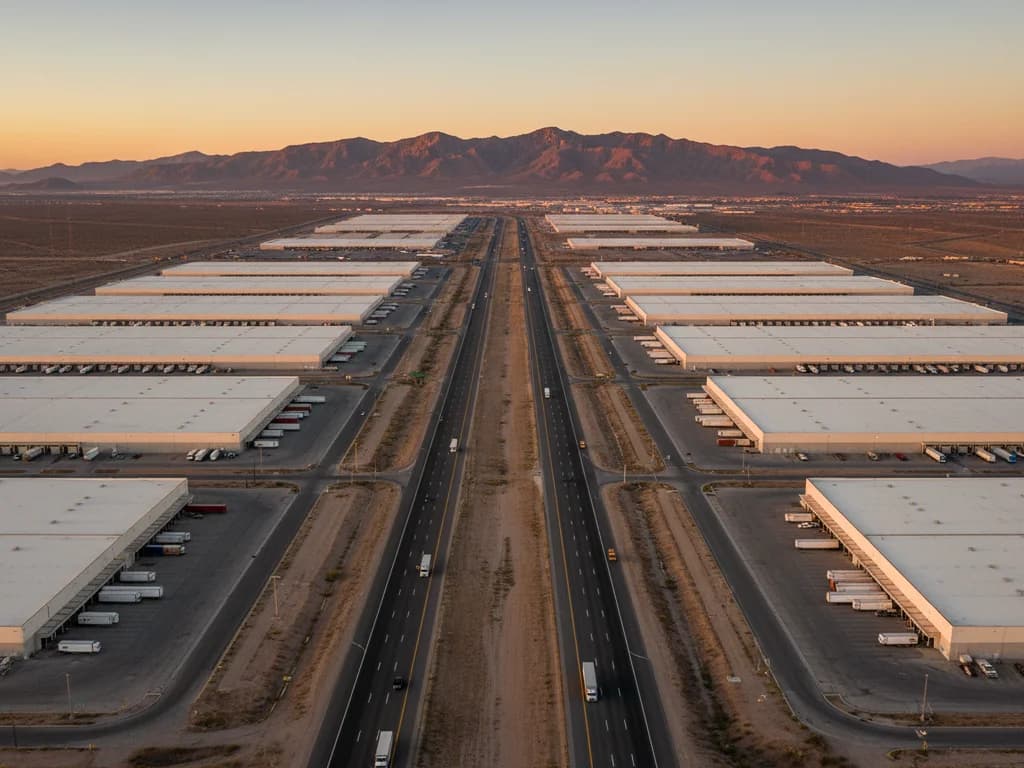
Cities such as Monterrey illustrate the scale of this industrial ecosystem. Nuevo León alone attracted more than $14 billion in foreign direct investment between 2021 and 2023, much of it linked to manufacturing and logistics projects associated with nearshoring. Industrial parks in the region have experienced record levels of occupancy as global manufacturers expand production capacity to serve North American markets.
The Economics Driving Nearshoring
Decisions about manufacturing location involve a complex evaluation of production costs, logistics considerations, trade policy, and operational risk. While labor costs historically dominated these calculations, modern supply chain decisions increasingly emphasize reliability and responsiveness.
Transportation costs and lead times play a critical role. Long-distance supply chains require companies to maintain larger inventories in order to buffer against shipping delays and production disruptions. Producing goods closer to consumer markets allows companies to operate with shorter lead times and lower inventory levels.
Trade policy also affects the economics of supply chain design. Tariffs imposed on goods produced in certain countries can make alternative manufacturing locations more attractive even if production costs are slightly higher. For example, a product manufactured in China and exported to the United States may face tariffs under Section 301 of the Trade Act, while the same product manufactured in Mexico could enter the United States duty-free if it satisfies USMCA rules of origin.
Companies also employ strategies known as tariff engineering, which involve designing products and manufacturing processes to optimize customs classifications and minimize import duties. These strategies often influence decisions about where components are produced and assembled. Manufacturing within the USMCA region can simplify these processes by allowing companies to qualify for preferential tariff treatment.
Mexico's advantages in this environment extend beyond logistics and trade policy. The country has developed a skilled industrial workforce and a large network of suppliers capable of supporting complex manufacturing operations. Automotive production illustrates the depth of this ecosystem. Mexico produced approximately 3.8 million vehicles in 2023, making it one of the largest automobile manufacturers in the world.
These factors make Mexico particularly attractive for companies whose primary market is North America. While Southeast Asian countries such as Vietnam and Thailand have also attracted manufacturing investment, their geographic distance from the United States limits their ability to replicate Mexico's logistical advantages.
Structural Constraints and Long-Term Capacity
Despite strong interest in nearshoring, several structural challenges could influence the pace of manufacturing expansion in Mexico.
Energy infrastructure is one of the most frequently cited concerns among investors. Manufacturing facilities require reliable electricity generation and access to natural gas pipelines, particularly in energy-intensive sectors such as automotive production and heavy industry. Industrial growth in northern Mexico has already placed increasing pressure on regional power grids, and expanding generation capacity will require substantial investment in both public and private energy infrastructure.
Transportation infrastructure also plays an important role. Cross-border trade between the United States and Mexico already moves through some of the busiest commercial border crossings in the world. The Laredo–Nuevo Laredo corridor, for example, handles more than $250 billion in trade annually, making it the largest inland port of entry in North America. Continued growth in manufacturing output will require expanded highway, rail, and customs infrastructure to prevent logistical bottlenecks.
Rapid industrial expansion also places pressure on housing, water resources, and urban infrastructure in manufacturing regions. Cities experiencing large inflows of industrial investment must accommodate growing populations of workers while maintaining reliable public services and transportation networks.
None of these challenges are unique to Mexico. Similar pressures have accompanied industrial expansion in manufacturing regions around the world. However, addressing these issues will be essential if Mexico is to fully capture the opportunities created by global supply chain restructuring.
Conclusion
Global manufacturing is entering a period of significant structural adjustment. Companies that once concentrated production in a single country are increasingly diversifying supply chains across multiple regions in order to reduce risk and improve responsiveness to major consumer markets.
Mexico's geographic proximity to the United States, its deep integration into North American trade frameworks, and its established manufacturing ecosystem position the country as a natural destination for nearshoring investment. Trade flows between the United States and Mexico already rank among the largest bilateral economic relationships in the world, and continued supply chain diversification could further strengthen this integration.
At the same time, the long-term impact of nearshoring will depend on Mexico's ability to expand infrastructure, strengthen energy capacity, and support sustainable industrial development in key manufacturing regions. If these challenges are addressed successfully, Mexico could play an increasingly central role in the next phase of North American manufacturing integration.
The transformation of global supply chains is unlikely to occur through a sudden relocation of production away from Asia. Instead, the emerging model is one of multi-regional manufacturing networks, in which production capacity is distributed across several regions serving major consumer markets. In that system, Mexico is likely to remain one of the most important industrial platforms in the Western Hemisphere.
Footnotes
- United Nations Industrial Development Organization (UNIDO), International Yearbook of Industrial Statistics, 2021.
- Peterson Institute for International Economics, "Trump's Trade War Timeline," 2023.
- U.S. Census Bureau, U.S. International Trade in Goods and Services, 2024.
- Secretaría de Economía, Government of Mexico, Foreign Direct Investment Statistics, 2023.
- International Organization of Motor Vehicle Manufacturers (OICA), Global Production Statistics, 2023.
- U.S. Department of Transportation, Bureau of Transportation Statistics, North American Freight Data, 2024.