
TradeApril 2026
Mexico's Role in How Global Firms Design Multi-Country Production Systems

David Arase
Deep Advisory Group
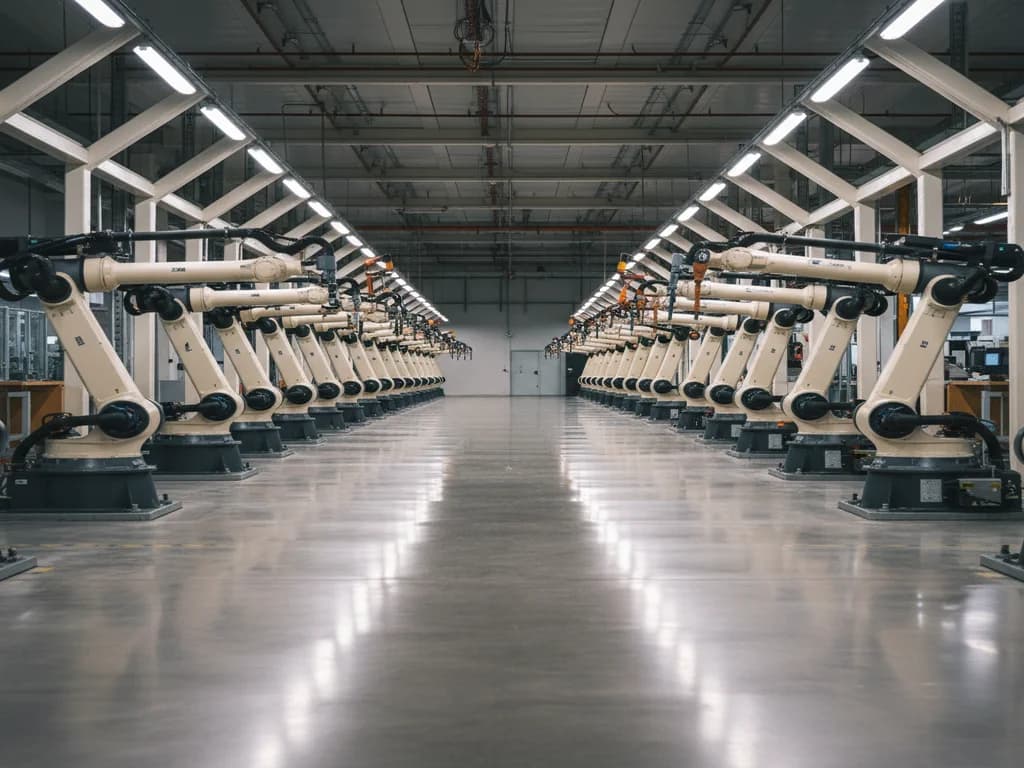
Modern manufacturing rarely occurs within the borders of a single country. Instead, global firms design production systems that distribute different stages of manufacturing across multiple locations. Components may be produced in one region, subassemblies manufactured in another, and final products assembled closer to major consumer markets. These geographically dispersed production systems are connected through transportation infrastructure, logistics management platforms, and complex supplier networks that coordinate production across continents.
This architecture of multi-country manufacturing has become one of the defining characteristics of the modern global economy. According to research by the Organization for Economic Co-operation and Development, global value chains now account for the majority of international trade, with intermediate goods and services comprising nearly 70 percent of global trade flows. The production of even relatively simple manufactured products often involves contributions from multiple countries.
Companies design these manufacturing systems intentionally. Decisions about where to locate production facilities involve considerations such as labor specialization, supplier ecosystems, transportation infrastructure, and proximity to major markets. The resulting production networks operate as integrated systems in which factories located in different countries perform specialized roles within a larger manufacturing architecture.
Mexico has emerged as an important platform within these systems. Its industrial base, geographic position within North America, and established manufacturing clusters make it a useful operational node for companies constructing multi-country production networks serving global markets.
Understanding this role requires examining how modern firms design manufacturing systems rather than focusing solely on where factories are located.
Manufacturing Strategy and the Geography of Production
Manufacturing strategy has evolved significantly over the past several decades. Earlier industrial models tended to concentrate production within a single country, where vertically integrated firms controlled multiple stages of the production process. Advances in transportation and communication technologies have gradually enabled companies to distribute production across wider geographic areas.
Containerized shipping, which expanded rapidly after the 1970s, dramatically reduced the cost of moving goods across long distances. Improvements in logistics software and enterprise resource planning systems later allowed firms to coordinate complex production processes across multiple facilities located in different countries. These technological developments made it possible to organize manufacturing as a geographically distributed system rather than a centralized one.
Global firms now routinely design supply chains that span several regions. Semiconductor manufacturing illustrates this phenomenon clearly. Chip design may occur in the United States, fabrication in Taiwan or South Korea, assembly in Southeast Asia, and final integration into electronic products elsewhere. Each stage of production occurs in locations where specialized expertise and industrial infrastructure already exist.
The same logic applies to many other industries. Automotive manufacturing relies on networks of suppliers producing thousands of specialized components that are assembled into finished vehicles across multiple factories. Electronics manufacturing depends on complex ecosystems of component suppliers producing semiconductors, displays, circuit boards, and other inputs.
These systems function because manufacturing activities are distributed across countries that possess complementary industrial capabilities.
Global Value Chains and Industrial Specialization
The rise of global value chains has allowed countries to specialize in particular stages of manufacturing rather than producing entire products domestically. This specialization reflects differences in industrial capabilities, labor skills, and supplier ecosystems.
Research from the World Trade Organization indicates that the share of intermediate goods in global trade has increased steadily over the past three decades, reflecting the growing fragmentation of production across multiple countries. A single manufactured product may incorporate components produced in several different regions before final assembly occurs.
This fragmentation allows firms to combine specialized capabilities from different countries within a single production system. For example, countries with advanced engineering capabilities may specialize in high-value component manufacturing, while other regions focus on large-scale assembly operations.
The resulting production networks are not simply collections of independent factories. They operate as coordinated systems in which production decisions in one location influence operations in others. Manufacturing schedules, inventory management, and transportation logistics must be synchronized across multiple facilities.
The complexity of these systems has encouraged firms to adopt sophisticated supply chain management strategies that integrate manufacturing, transportation, and inventory planning.
Mexico's Role in Global Manufacturing Systems
Mexico's participation in global manufacturing networks has expanded significantly over the past several decades. The country's manufacturing sector now spans multiple industries including automotive production, electronics manufacturing, aerospace components, and household appliances.
These industries operate through production networks that extend across several countries. Automotive supply chains, for example, involve extensive collaboration between component manufacturers and assembly plants located throughout North America.
Mexico produced approximately 3.8 million vehicles in 2023, according to the International Organization of Motor Vehicle Manufacturers. Much of this production involves the integration of components manufactured across several countries. Parts suppliers provide engines, electronic systems, and other specialized components that are assembled into finished vehicles at manufacturing facilities located in Mexico.
Electronics manufacturing provides another example of Mexico's integration into global production systems. Factories in regions such as Baja California and Jalisco produce televisions, computers, and electronic components that incorporate inputs sourced from multiple international suppliers.
The development of these industries has created extensive manufacturing ecosystems within Mexico. Supplier networks, logistics providers, and specialized labor markets support large-scale production operations that form part of broader global value chains.
Industrial Clusters and Manufacturing Ecosystems
Manufacturing networks depend not only on individual factories but also on the broader industrial ecosystems that support them. These ecosystems include suppliers, engineering firms, logistics companies, training institutions, and infrastructure that collectively enable large-scale production.
Industrial clusters play a particularly important role in this process. Regions with concentrated manufacturing activity often develop specialized capabilities that attract additional investment. Supplier networks become more sophisticated as firms expand their operations, creating positive feedback loops that strengthen the industrial base of the region.
Mexico has developed several such clusters over the past three decades. Automotive manufacturing hubs in states such as Guanajuato, Puebla, and Nuevo León host assembly plants and supplier networks serving global automobile companies. Aerospace manufacturing has developed around clusters in Querétaro and Baja California. Electronics manufacturing has expanded in regions such as Guadalajara, sometimes referred to as Mexico's "Silicon Valley."
These clusters allow companies to incorporate Mexican facilities into global production systems more easily. When suppliers, logistics providers, and skilled workers are located in close proximity to manufacturing plants, firms can coordinate production more efficiently.
Foreign direct investment has contributed significantly to the development of these industrial ecosystems. According to the United Nations Conference on Trade and Development, Mexico attracted approximately $35 billion in foreign direct investment in 2023, with manufacturing accounting for a substantial portion of those inflows.
Corporate Supply Chain Design
For multinational firms, the design of manufacturing networks involves balancing several strategic considerations. Companies must determine how to allocate production activities across multiple facilities while maintaining operational efficiency.
One key consideration is specialization. Different factories within a production network may focus on particular components or stages of assembly. Specialization allows firms to develop expertise in specific manufacturing processes while reducing duplication across facilities.
Another factor is logistical coordination. Transportation infrastructure, shipping routes, and delivery times all influence how production activities are distributed geographically. Factories must be located in positions that allow efficient movement of components between facilities.
Risk management has also become an increasingly important factor in supply chain design. Companies often maintain production capacity in multiple locations to reduce dependence on any single facility or region.
Mexico's manufacturing sector has become integrated into these strategic calculations. Its industrial infrastructure and geographic position allow firms to incorporate Mexican facilities into production networks that serve markets across North America.
Conclusion
The structure of global manufacturing has evolved toward increasingly complex production networks spanning multiple countries. Rather than concentrating manufacturing in a single location, multinational firms now distribute production across regions that possess complementary industrial capabilities.
These multi-country manufacturing systems allow companies to combine specialized expertise from different regions while maintaining flexibility in the face of economic and logistical uncertainty.
Mexico's industrial development over the past several decades has positioned the country as an important participant in these networks. Its manufacturing clusters, supplier ecosystems, and integration with North American markets allow companies to incorporate Mexican facilities into broader global production architectures.
As global manufacturing continues to evolve, the most successful production systems will likely be those capable of coordinating manufacturing activities across multiple regions. In that environment, the role of countries such as Mexico will be defined not only by the presence of individual factories but also by their position within the networks that connect global industry.
Footnotes
- OECD, Trade in Value Added (TiVA) Database, 2023.
- World Trade Organization, Global Value Chain Development Report, 2023.
- International Organization of Motor Vehicle Manufacturers (OICA), World Motor Vehicle Production Statistics, 2023.
- United Nations Conference on Trade and Development (UNCTAD), World Investment Report, 2024.